



The $14 vs $2 Plot Twist: Why GLM-4.7 Just Broke the AI Leaderboard
Author(s): Adham Khaled Originally published on Towards AI. Ranking #6 on the Artificial Analysis Index, this open-weight model just made “Agentic AI” affordable for the rest of us. Two months ago, I wrote about how GLM-4.6 was the “Claude-level AI at 1/7th …
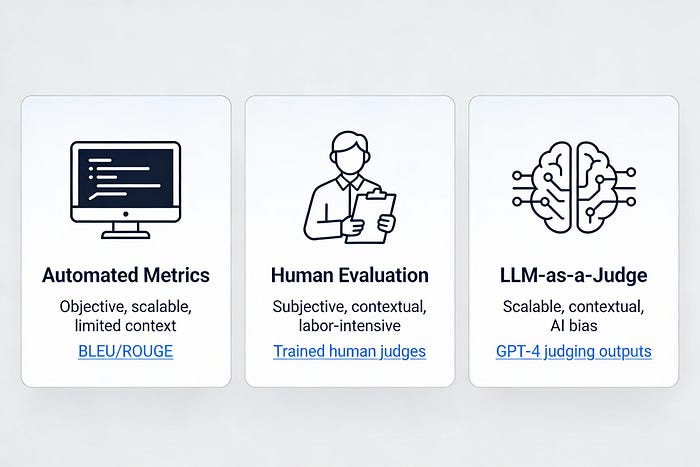
The Truth About LLM Evals: Why Your AI Model Might Be Better (or Worse) Than You Think
Author(s): Nikhil Originally published on Towards AI. When you’re building or deploying a large language model (LLM), one critical question emerges: how do you know if it’s actually good? Unlike traditional software where you can measure success with clear metrics like “did …

A Practical Guide to Building RAG Systems: Series Introduction
Author(s): Angela & Kezhan Shi Originally published on Towards AI. A shared framework behind diverse use cases If you try to build a RAG system, you may face these concrete problems very quickly: Document QA — all images by authorThis article serves …

The Ghost Teacher: Why Yann LeCun Says “Generative” AI might be a Dead End
Author(s): Siddharth M Originally published on Towards AI. Meta’s latest 7B-parameter vision model (DINOv3) proves that “labels” are the bottleneck of intelligence. Here is the definitive engineering deep dive into Gram Anchoring, the Ghost Teacher, and the future of Objective-Driven AI. Yann …
I Thought Private Variables Were Actually Private (Then I Accessed Them From Outside the Class)
Author(s): Dua Asif Originally published on Towards AI. AI GENERATED class BankAccount: def __init__(self, balance): self.__balance = balance # Private variable def get_balance(self): return self.__balance def withdraw(self, amount): if amount <= self.__balance: self.__balance -= amount return True return False Two underscores. That …
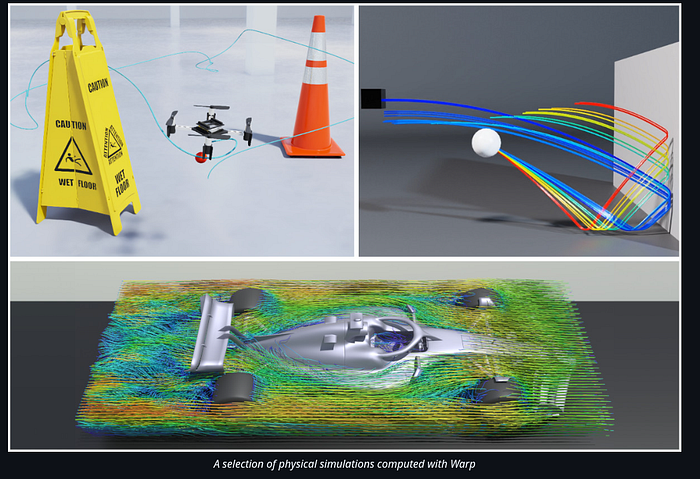
This Python Package Makes Differentiable Physics Simulations Practical
Author(s): Gowtham Boyina Originally published on Towards AI. It’s from NVIDIA, it's not CUDA I’ve spent way too long fighting with CUDA just to prototype a simple physics simulation. You either hand-roll low-level kernels in C++ — which breaks your Python workflow …
The $18/Hour Hacker: How AI Redefined the Economics of Cyber Attack
Author(s): MohamedAbdelmenem Originally published on Towards AI. For security leaders: a breakdown of the first documented AI-driven cyber campaign, the new tools already in the wild, and a concrete three-tier plan to rebuild your defenses. If you’re not responsible for security posture, …

Benchmarking Zero‑Shot Object Detection: A Practical Comparison of SOTA models
Author(s): Mohsin Khan Originally published on Towards AI. 1. Introduction In the first blog of this series — “Practical Guide to Zero‑Shot Object Detection: Detect Unseen Objects Without Retraining” — we explored how Zero‑Shot Object Detection (ZSOD) works and why it’s becoming …
Training the Same Neural Network with Different Optimizers
Author(s): Gradient Thoughts Originally published on Towards AI. Source: Image by Conny Schneider on Unsplash Optimizers are often discussed under a simplistic, surface level lens: adaptive methods like Adam are said to converge faster, while SGD is believed to generalize relatively better …

Master Pandas Performance with Python: 7 Lessons Every Junior Data Scientist Needs
Author(s): Mouez Yazidi Originally published on Towards AI. Hands-on examples that show you how to optimize memory and execution without leaving Pandas. If you’re new to Pandas and want a quick introduction before diving in, check out this beginner-friendly guide to get …

What Makes a Career in Data Science Future-Proof in the Age of Automation
Author(s): Shrutisharmax Originally published on Towards AI. Automation is changing how work gets done across industries. Tasks that were once handled manually are now managed by algorithms, software systems, and machines. While this shift has created uncertainty around many traditional roles, it …
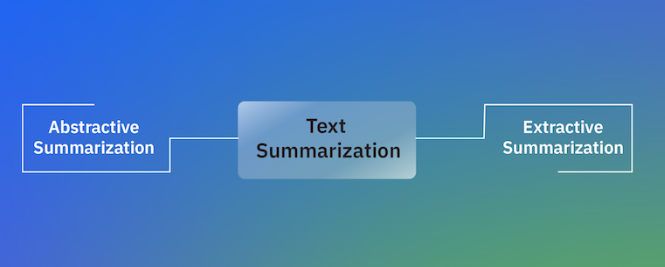
Text Summarization: Comprehensive Overview with and without RAG
Author(s): Rashmi Originally published on Towards AI. Text Summarization: Comprehensive Overview with and without RAG Text summarization is the process of automatically condensing longer text documents into shorter versions while preserving the key information and main ideas. No image caption availableThis article …

LLM & AI Agent Applications with LangChain and LangGraph — Part 11: Tools
Author(s): Michalzarnecki Originally published on Towards AI. Welcome to the next part of the course dedicated to LLM-driven applications development. In this episode we’ll cover another key building block in the LangChain ecosystem: tools. Language models are incredibly powerful on their own, …

LLM & AI Agent Applications with LangChain and LangGraph — Part 10- Chains and LCEL
Author(s): Michalzarnecki Originally published on Towards AI. Designing clear data flows in LangChain Welcome back to another module related to LLM-driven applications development. In the previous parts we introduced the idea of chains — sequences of steps that connect prompts, models, parsers …

LLM & AI Agent Applications with LangChain and LangGraph — Part 9 — Conversation Memory
Author(s): Michalzarnecki Originally published on Towards AI. Welcome back to another article focused on the LLM-driven applications development. In this part of the course we’ll look at memory in LangChain — in other words, how to make sure that the assistant you’re …
Recent Posts


