AI Agents Are Stuck in the Terminal
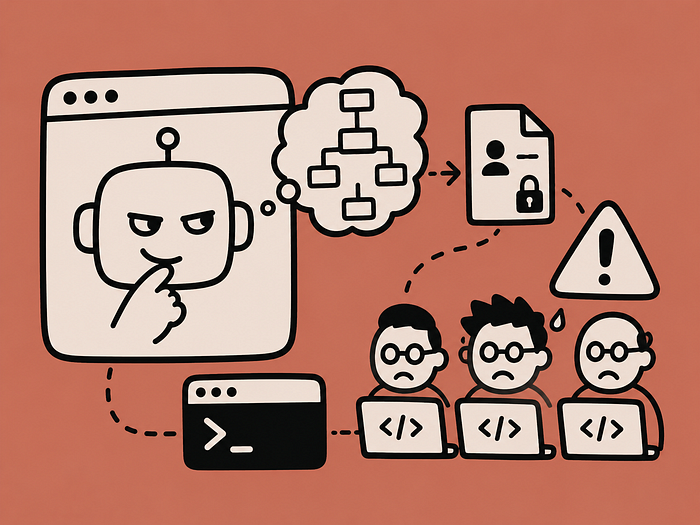
Author(s): Gowtham Boyina Originally published on Towards AI. Smooth Gives Them a Browser They Can Actually Use I’ve watched Agents autonomously refactor entire codebases, write test suites, and debug complex systems. But ask it to check a flight price on Google Flights? …

Leveraging Emerging AI Agents in Composable CDPs
Author(s): Clarencer R. Mercer Originally published on Towards AI. Cover Image Credit: Created by Author using DALL-E 3. How Warehouse-First Architectures Enable Agent-Driven Customer Intelligence AI Agents are rapidly emerging, enabling autonomous decision-making across customer-facing workflows. From personalized recommendations to real-time churn …
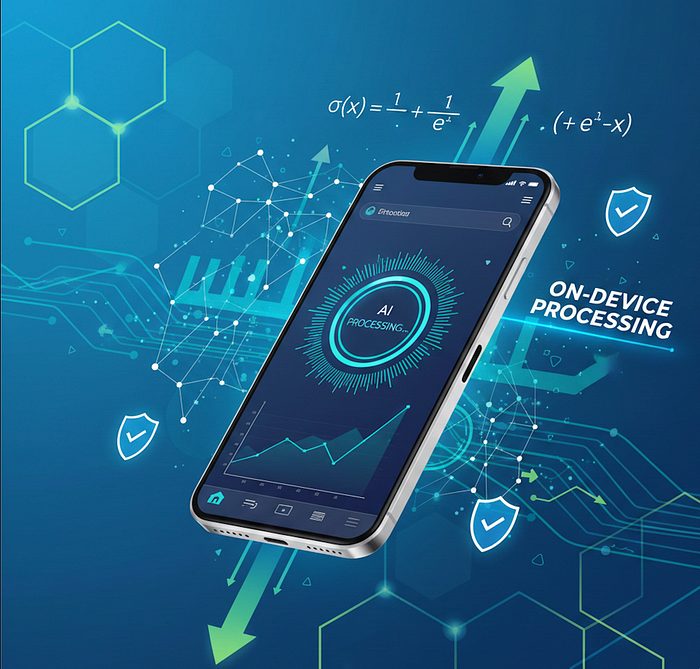
From CS230 Theory to Production Android: Building a Privacy-First Credit Risk Classifier
Author(s): Vortana Say Originally published on Towards AI. How I transformed deep learning mathematics into a real-world FinTech application that processes loan decisions entirely on-device I was sitting in my home office, working through Andrew Ng’s CS230 Deep Learning course, scribbling equations …
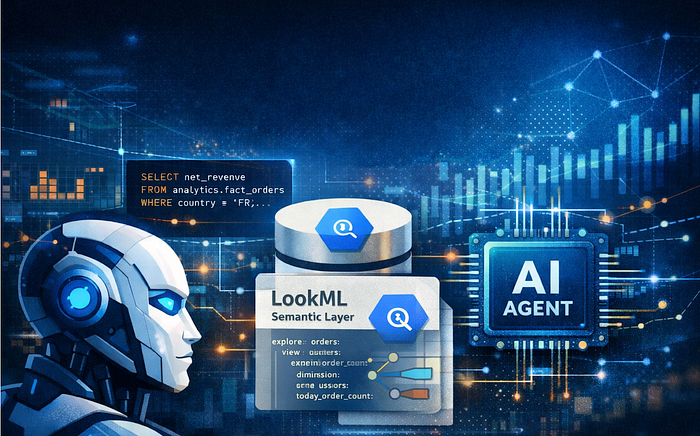
LookML: An Alternative Semantic Layer Approach to build a Reliable AI Analytics Agent with BigQuery
Author(s): allglenn Originally published on Towards AI. Before we talk about where to store your registry, let’s address the elephant in the room: What about LookML? If you’re already using Looker, you might be wondering whether you need to build this YAML-based …

Mastering Authentication in MCP: An AI Engineer’s Comprehensive Guide
Author(s): Neel Shah Originally published on Towards AI. As an AI engineer working with the Message Control Protocol (MCP), I’ve implemented and evaluated three authentication methods to secure client-server communication: API Key-based, JWT-based with custom implementation, and JWT-based with FastMCP’s built-in authentication. …
Concurrent vs. Parallel Execution in LLM API Calls: From an AI Engineer’s Perspective
Author(s): Neel Shah Originally published on Towards AI. As an AI engineer, designing systems that interact with Large Language Models (LLMs) like Google’s Gemini is a daily challenge. LLM API calls are inherently I/O-bound — waiting for responses from remote servers — …
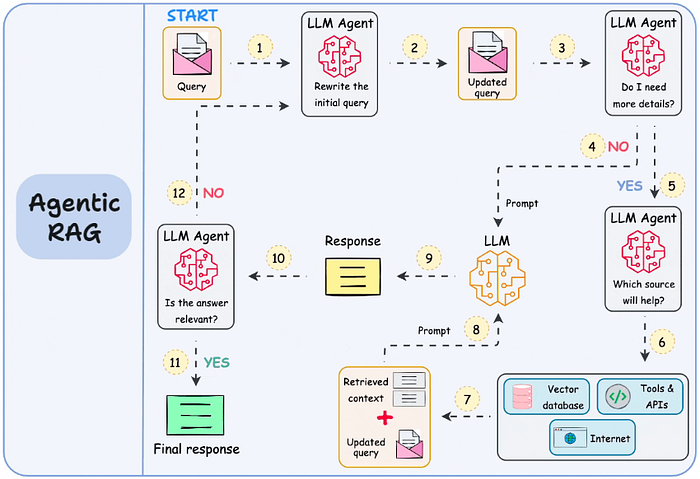
From Simple RAG to Agentic RAG: Unlocking Smarter AI Workflows as an AI Engineer
Author(s): Neel Shah Originally published on Towards AI. As an AI engineer who’s spent countless hours tweaking retrieval systems and wrestling with hallucinations in large language models (LLMs), I’ve seen firsthand how Retrieval-Augmented Generation (RAG) has evolved from a straightforward tool into …
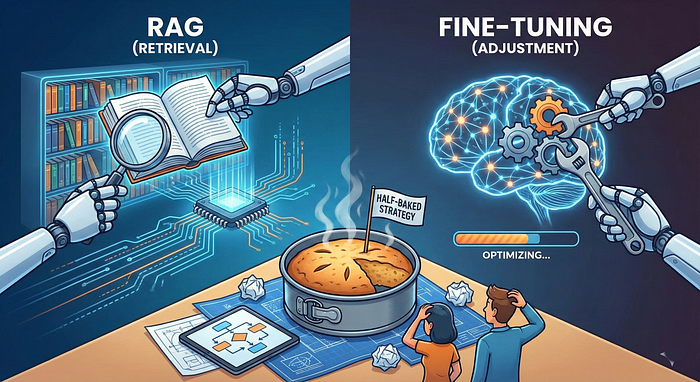
RAG vs. Fine-Tuning: Why Your LLM Strategy is Probably Half-Baked
Author(s): TANVEER MUSTAFA Originally published on Towards AI. RAG vs. Fine-Tuning: Why Your LLM Strategy is Probably Half-Baked When I first started building LLM applications, I fell into a common trap: I treated RAG (Retrieval-Augmented Generation) and Fine-Tuning as interchangeable tools. I …

How We Built a 99% Accurate Invoice Processing System Using OCR and LLMs
Author(s): Vaibhav Rathi Originally published on Towards AI. We had a working RAG solution at 91% accuracy. Here’s why we rebuilt it with fine-tuning and what we learned along the way. Our client was spending eight minutes per invoice on manual data …
When Optimization Works: The Role of Convexity in Business Decisions
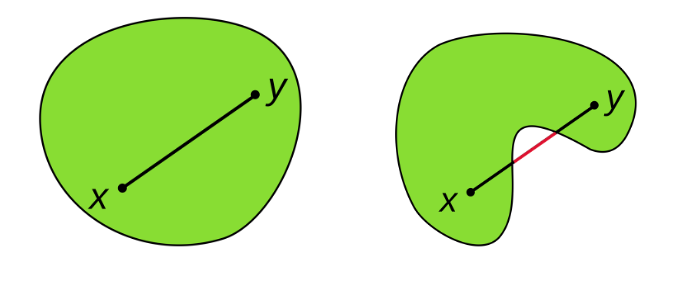
Author(s): Saif Ali Kheraj Originally published on Towards AI. Every business decision operates under constraints, budgets, capacity, regulations, and trade-offs. The structure of those constraints determines whether a decision has a single clear optimal choice or several competing alternatives. Convex problems lead …
Recent Posts