Effective Strategies for Addressing K-Means Initialization Challenges
Last Updated on November 5, 2023 by Editorial Team
Author(s): Flo
Originally published on Towards AI.
Using n_init and K-Means++
image by Flo
K-Means is a widely-used clustering algorithm in Machine Learning, boasting numerous benefits but also presenting significant challenges. In this article, we delve into its limitations and offer straightforward solutions to address them.
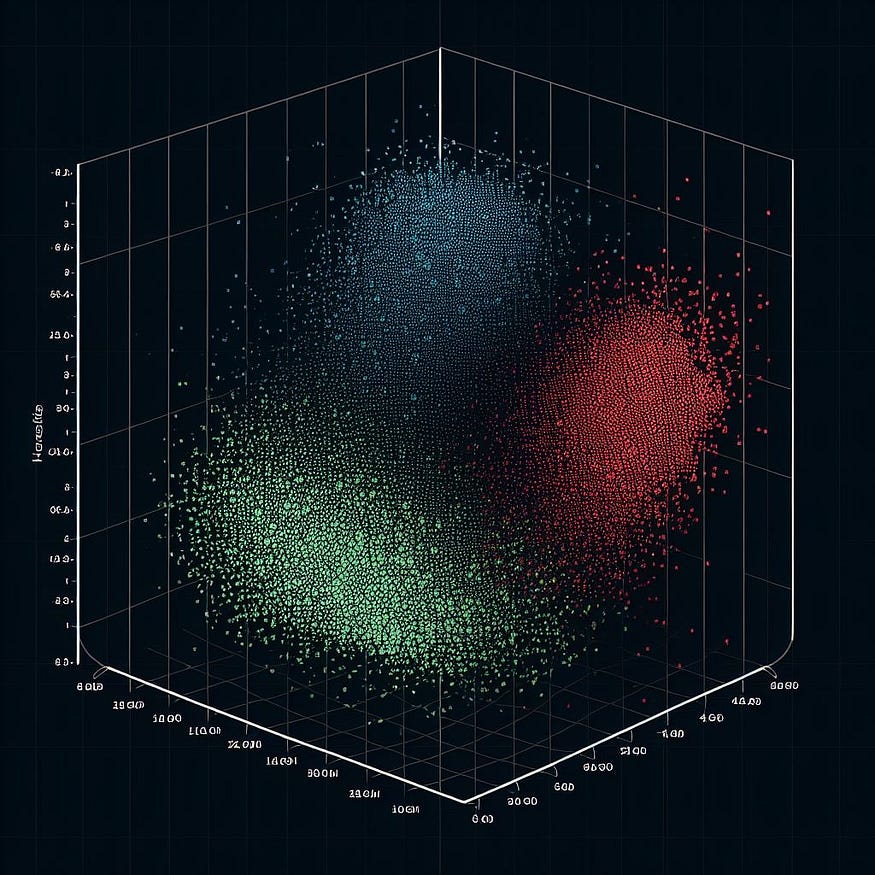
K-Means is a clustering algorithm that partitions data into K clusters. It initializes K centroids randomly and then assigns each data point to the nearest centroid. Centroids are recalculated based on the mean of assigned points, and the process repeats until convergence.
I illustrate it below with t-distributed stochastic neighbor embedding, a dimension reduction technique. Each cluster is represented by a color.
K-Means clusters via T-SNE, image by Flo
K-Means… Read the full blog for free on Medium.
Join thousands of data leaders on the AI newsletter. Join over 80,000 subscribers and keep up to date with the latest developments in AI. From research to projects and ideas. If you are building an AI startup, an AI-related product, or a service, we invite you to consider becoming a sponsor.
Published via Towards AI
Towards AI Academy
We Build Enterprise-Grade AI. We'll Teach You to Master It Too.
15 engineers. 100,000+ students. Towards AI Academy teaches what actually survives production.
Start free — no commitment:
→ 6-Day Agentic AI Engineering Email Guide — one practical lesson per day
→ Agents Architecture Cheatsheet — 3 years of architecture decisions in 6 pages
Our courses:
→ AI Engineering Certification — 90+ lessons from project selection to deployed product. The most comprehensive practical LLM course out there.
→ Agent Engineering Course — Hands on with production agent architectures, memory, routing, and eval frameworks — built from real enterprise engagements.
→ AI for Work — Understand, evaluate, and apply AI for complex work tasks.
Note: Article content contains the views of the contributing authors and not Towards AI.
Related posts
Recent Posts