RNNs Cannot Think What Transformers Think Cheaply. ICLR 2026 Proved the Gap Is Exponential.
Author(s): DrSwarnenduAI Originally published on Towards AI. For a decade, we asked if RNNs can represent what Transformers represent. We proved they can. We forgot to ask how expensively. That omission just cost us ten years. “Can our architecture represent everything a …

Time Series Made So Easy My Aunt Got It on the Second Read
Author(s): Kamrun Nahar Originally published on Towards AI. SARIMAX, Prophet, XGBoost, LSTM, and N-BEATS broken down without any pretentious math. Pick the right model in under five minutes today. The 9 billion dollar lesson. In November 2021, Zillow walked into a conference …
Is 3-Bit KV Cache the Holy Grail? A Reality Check on Google’s TurboQuant
Author(s): Ravi Yogesh Originally published on Towards AI. 10 experiments, 3 models, one honest verdict: the quality story is real, the speed story needs a disclaimer, and there’s a finding in the entropy data nobody talks about. ⏱ ~14 min read🔬 Deep …

LangGraph Multi-Agent Architecture: Building a Self-Critiquing AI Debate System
Author(s): Rishav Saigal Originally published on Towards AI. A technical deep-dive into the LangGraph state machine, Pydantic-driven routing, and Critique Agent design powering the LLM Drift Experiment. In the opening piece of this series, we explored the conceptual “why” behind LLM Drift …

Building Vector Search? Why FAISS Alone Isn’t Enough
Author(s): Tina Sharma Originally published on Towards AI. What FAISS Does Well, Where It Stops, and When to Use a Vector Database Instead FAISS is a fast vector search library, not a database. Learn what it does well, where it fails in …

TAI #202: GPT-5.5 Moves Codex Into Real Work
Author(s): Towards AI Editorial Team Originally published on Towards AI. What happened this week in AI by Louie OpenAI released GPT-5.5 on April 23. In the same week, they launched workspace agents in ChatGPT and released Privacy Filter for PII redaction; Google …

Machine Learning System Design -The Model Serving Triangle, With One Forward Pass Flowing Through Every Trade-off (Part3)
Author(s): Utkarsh Mittal Originally published on Towards AI. The Model Serving Triangle, With One Forward Pass Flowing Through Every Trade-off (Part3) Part 1-p https://pub.towardsai.net/the-ml-system-design-interview-with-numbers-flowing-through-every-stage-part-1-a77888339297?source=friends_link&sk=9064640f37c84a131ef24b1126bc0cf9 Three pieces of memory math that every candidate must have memorizedThis article discusses the complexities and trade-offs of …

AI Orchestration in Action: How MuleSoft and LLMs Fuel the Future of Enterprise AI
Author(s): CapeStart Originally published on Towards AI. Nowadays, in the enterprise environment, information is dispersed across CRMs, ERPs, databases, and millions of APIs, resulting in an intricate web of disconnected data. At the same time, the realm of Artificial Intelligence is exploding …

GPT-4 Has 1.8 Trillion Parameters. It Uses 2% of Them Per Token.
Author(s): DrSwarnenduAI Originally published on Towards AI. GPT-4 Has 1.8 Trillion Parameters. It Uses 2% of Them Per Token. DeepSeek-R1: 671 billion parameters. 37 billion active per token. DeepSeek-R1: 671 billion parameters. 37 billion active per token.The article discusses various machine learning …
TAI #200: Anthropic’s Mythos Capability Step Change and Gated Release
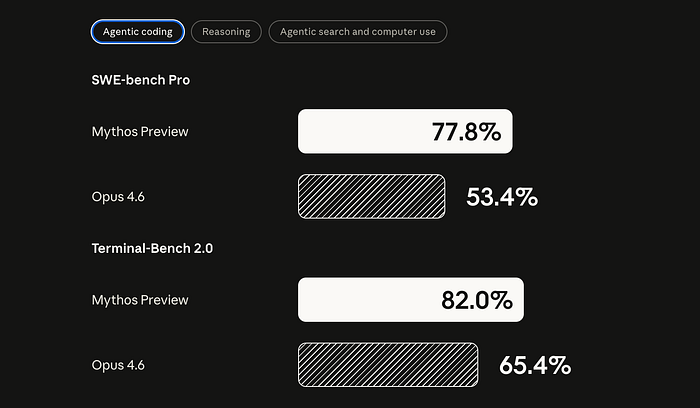
Author(s): Towards AI Editorial Team Originally published on Towards AI. What happened this week in AI by Louie This week, Anthropic unveiled a new flagship-class model, Claude Mythos Preview. It limited access to the model to “Project Glasswing”, a tightly gated cyber-defense …
Anthropic Just Shipped the Layer That’s Already Going to Zero
Author(s): Gaurav Yadav Originally published on Towards AI. Anthropic shipped Managed Agents this week. AWS Bedrock AgentCore has been GA for five months. The interesting question isn’t who wins the runtime — it’s where the value migrates when the layer goes flat. …
The L1 Loss Gradient, Explained From Scratch
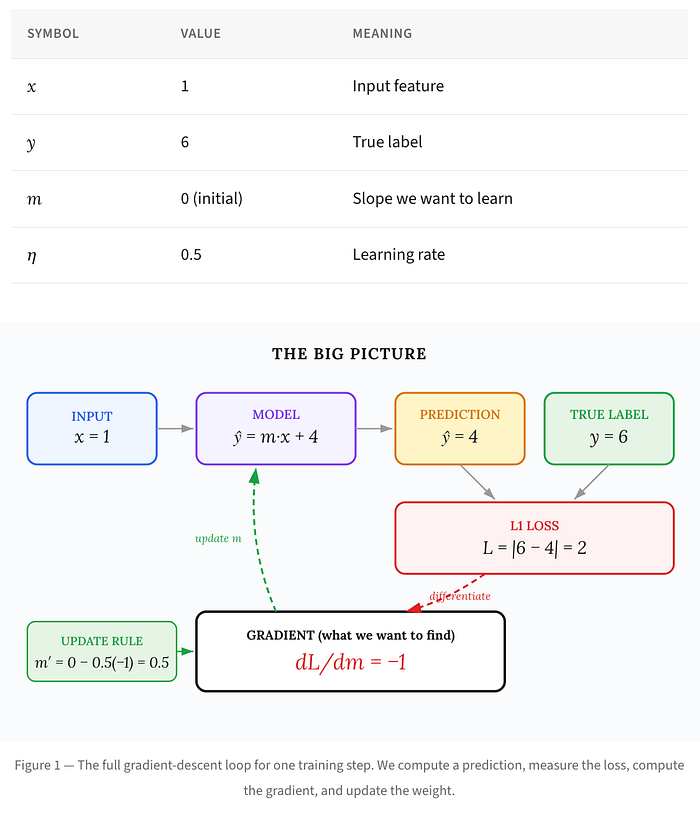
Author(s): Utkarsh Mittal Originally published on Towards AI. A complete, step-by-step walkthrough of how gradient descent works with absolute-value loss — with diagrams you can actually follow. If you’ve ever read a deep learning tutorial and hit a derivative that seems to …

I Directed AI Agents to Build a Tool That Stress-Tests Incentive Designs. Here’s What It Found.
Author(s): Selfradiance Originally published on Towards AI. Incentive Wargame I don’t write code. I have zero programming experience. What I do is direct AI coding agents — Claude Code, Codex — to build open-source tools, and then I test them until they …
Long-Term vs Short-Term Memory for AI Agents: A Practical Guide Without the Hype
Author(s): Andrii Tkachuk Originally published on Towards AI. Over the past year, memory has become one of the most overused — and misunderstood — concepts in AI agent design. But before I start, I want to add a few words, most of …

The LLM Wiki Trend Has a Retention Problem Nobody Mentions
Author(s): Mayank Bohra Originally published on Towards AI. The viral LLM Knowledge Base workflow looks productive, but EEG studies show that outsourced note-taking weakens memory and critical thinking. Here is the fix. The LLM Wiki trend is a workflow where you dump …
Recent Posts