Teacher-Student Neural Networks: Knowledge Distillation in Modern AI
Last Updated on November 6, 2023 by Editorial Team
Author(s): Shahriar Hossain
Originally published on Towards AI.
In the ever-evolving landscape of artificial intelligence, as models burgeon in complexity and size, the challenge arises: How do we deploy these colossal models on hardware with limited resources? Enter the realm of Knowledge Distillation — a technique that promises to revolutionize AI deployments, especially in resource-constrained environments.
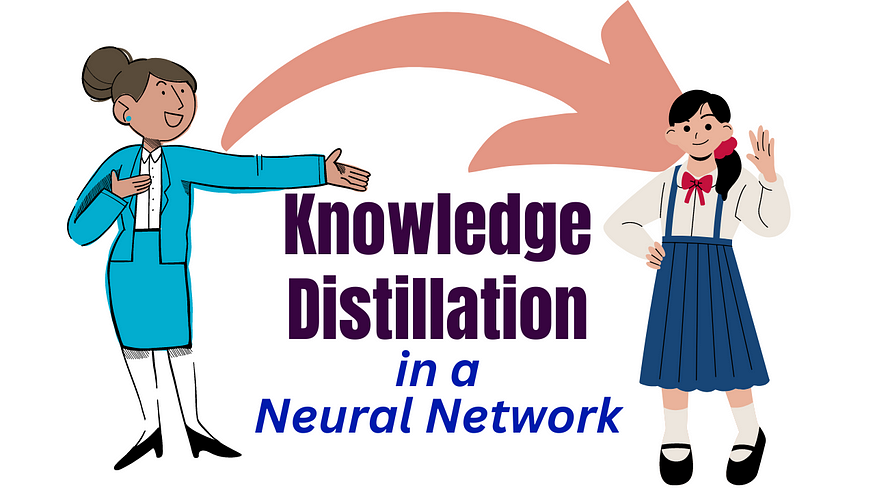
Source: Image by the author (created using Canva)
At its core, knowledge distillation is about transferring knowledge from a large, complex model (often called the teacher) to a smaller, simpler model (the student). Instead of merely training the student model directly on the raw data, it’s trained using the outputs of the teacher model…. Read the full blog for free on Medium.
Join thousands of data leaders on the AI newsletter. Join over 80,000 subscribers and keep up to date with the latest developments in AI. From research to projects and ideas. If you are building an AI startup, an AI-related product, or a service, we invite you to consider becoming a sponsor.
Published via Towards AI
Towards AI Academy
We Build Enterprise-Grade AI. We'll Teach You to Master It Too.
15 engineers. 100,000+ students. Towards AI Academy teaches what actually survives production.
Start free — no commitment:
→ 6-Day Agentic AI Engineering Email Guide — one practical lesson per day
→ Agents Architecture Cheatsheet — 3 years of architecture decisions in 6 pages
Our courses:
→ AI Engineering Certification — 90+ lessons from project selection to deployed product. The most comprehensive practical LLM course out there.
→ Agent Engineering Course — Hands on with production agent architectures, memory, routing, and eval frameworks — built from real enterprise engagements.
→ AI for Work — Understand, evaluate, and apply AI for complex work tasks.
Note: Article content contains the views of the contributing authors and not Towards AI.
Related posts
Recent Posts