Building a Deal Desk Intelligence Agent with LangChain and OpenAI
Author(s): Krishnan Srinivasan Originally published on Towards AI. Most enterprise AI journeys begin with prompts. Teams use language models to summarize documents, classify tickets, or generate insights from unstructured text. These are valuable capabilities and often the first step in adopting AI …
Beyond the Transformer Paradigm
Author(s): Shashwata Bhattacharjee Originally published on Towards AI. The release of Google’s TITANS architecture in late 2024 marks a theoretical inflection point in how we conceptualize machine memory. This isn’t merely another incremental improvement in long-context processing — it’s a fundamental rethinking …
The OpenClaw Mess: Why Your Autonomous Agent is a Security Suicide Note.
Author(s): Mandar Karhade, MD. PhD. Originally published on Towards AI. When 200,000 GitHub stars meet 30,000 exposed instances, it’s time to stop the madness. These 6 Alternatives Might Actually Be Better for You. OpenClaw is the 800-pound gorilla of self-hosted AI assistants …
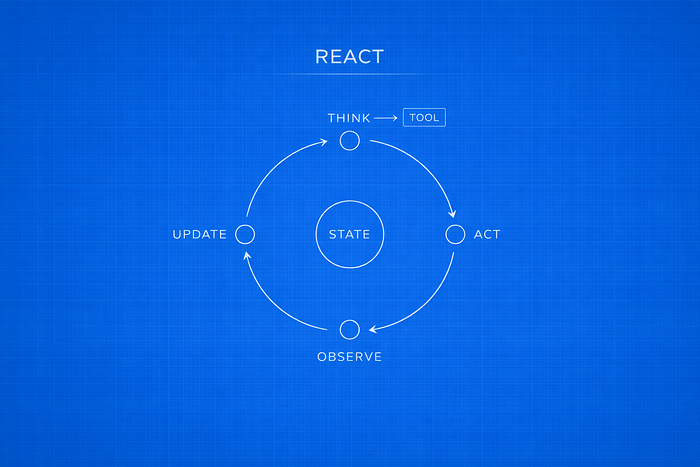
Agent Control Patterns — Part 4: ReAct — Thinking While Acting
Author(s): Vahe Sahakyan Originally published on Towards AI. So far in this series, we designed systems with predefined structure. We defined the execution flow. We separated reasoning from revision. We controlled when research happens. Even when loops were introduced, the workflow remained …
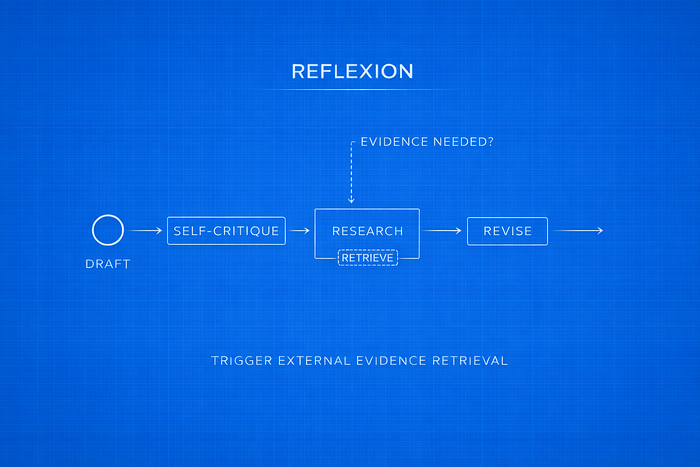
Agent Control Patterns — Part 3: Reflexion — When Review Triggers Research
Author(s): Vahe Sahakyan Originally published on Towards AI. A model can review its own answer and still return incorrect information. It may recognize uncertainty, improve its wording, and clarify its reasoning. But if the missing piece is factual, reviewing the answer again …
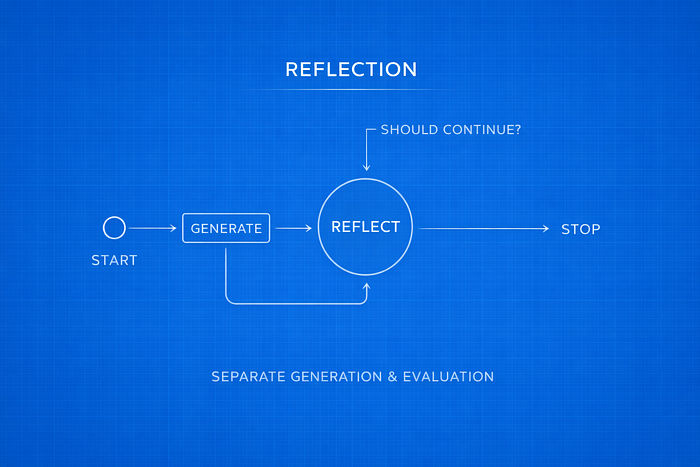
Agent Control Patterns — Part 2: Reflection — A Simple Way to Improve Answer Quality
Author(s): Vahe Sahakyan Originally published on Towards AI. An agent can execute a workflow correctly and still produce a weak answer. It may follow the graph, respect routing rules, and stop exactly where it should — yet return a response that lacks …

Link Decay Prediction in Affiliate Marketing: Turning “Alive” URLs into a Time Series Monitoring Problem
Author(s): Hernan M Originally published on Towards AI. Key Takeaways Affiliate link health isn’t binary, even if most dashboards force it into green/red. A link can be “up” and still be quietly losing a third of your traffic. The strongest signal I’ve …

TAI #194: AI Goes Macro; Job Loss Fears, Military Usage, OpenAI $110B Raise
Author(s): Towards AI Editorial Team Originally published on Towards AI. What happened this week in AI by Louie This week brought a series of developments that signal AI is quickly becoming more than just a technology story: AI’s revenue, its politics, and …
OpenClaw Won’t Bite, A Zero-to-Hero Guide for People Who Hate Terminal
Author(s): Kamrun Nahar Originally published on Towards AI. What Even Is OpenClaw, Though? Let me tell it straight. OpenClaw is an open-source, self-hosted AI agent built by Peter Steinberger. It started life as “Clawdbot” in November 2025, got renamed to “Moltbot” after …

Runtime Reinforcement: Preventing “Instruction Decay” in Long Context Windows
Author(s): Shreyash Shukla Originally published on Towards AI. Image Source: Google Gemini The “Floating Brain” Problem In our previous articles, we discussed how to give the agent knowledge (Graph), sight (Shape), and empathy (User Context). But even a perfect agent suffers from …
Recent Posts