The Efficiency Wall: Why the Next 1,000x Leap Isn’t More GPUs
Last Updated on February 12, 2026 by Editorial Team
Author(s): Kapardhi kannekanti
Originally published on Towards AI.
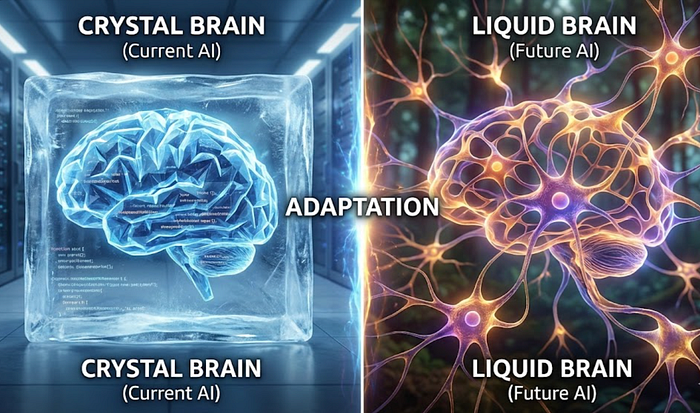
The fundamental flaw in modern AI architecture, and the biological “hack” to solve it.
We are currently witnessing a massive misallocation of capital in Silicon Valley and beyond. We are burning billions of dollars to build bigger “statues” — massive, frozen models that know everything but can do nothing in the real world without a constant tether to a massive server farm.
The article discusses the limitations of modern AI’s architectural design, arguing for a shift from static models towards adaptive, liquid intelligence akin to biological systems. It highlights the need for AI systems to evolve, respond dynamically to their environments, and employ strategies like competitive plasticity to enhance real-world applications. By integrating concepts from neuroscience, the author advocates for an engineering approach that prioritizes flexibility and efficiency, ultimately aiming to transcend the GPU-dominated era of AI development.
Read the full blog for free on Medium.
Join thousands of data leaders on the AI newsletter. Join over 80,000 subscribers and keep up to date with the latest developments in AI. From research to projects and ideas. If you are building an AI startup, an AI-related product, or a service, we invite you to consider becoming a sponsor.
Published via Towards AI
Towards AI Academy
We Build Enterprise-Grade AI. We'll Teach You to Master It Too.
15 engineers. 100,000+ students. Towards AI Academy teaches what actually survives production.
Start free — no commitment:
→ 6-Day Agentic AI Engineering Email Guide — one practical lesson per day
→ Agents Architecture Cheatsheet — 3 years of architecture decisions in 6 pages
Our courses:
→ AI Engineering Certification — 90+ lessons from project selection to deployed product. The most comprehensive practical LLM course out there.
→ Agent Engineering Course — Hands on with production agent architectures, memory, routing, and eval frameworks — built from real enterprise engagements.
→ AI for Work — Understand, evaluate, and apply AI for complex work tasks.
Note: Article content contains the views of the contributing authors and not Towards AI.
Related posts
Recent Posts