
Scaling Laws: How to Allocate Compute for Training Language Models
Author(s): M
Originally published on Towards AI.
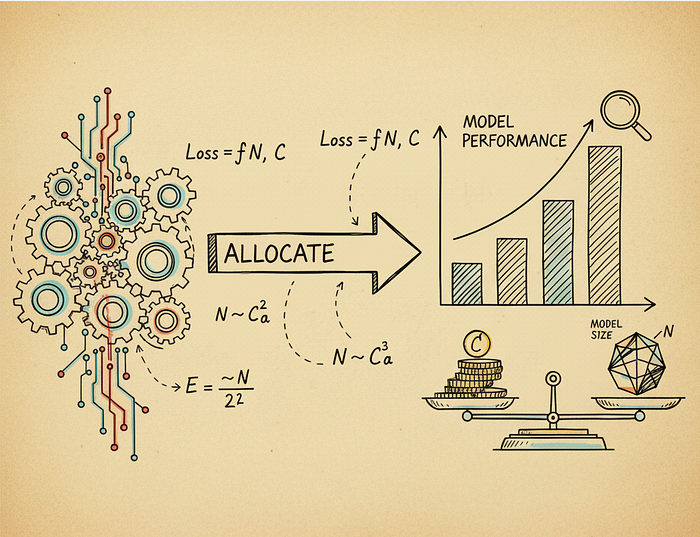
From Chinchilla’s 20:1 rule to SmolLM3’s 3,700:1 ratio: how inference economics rewrote the training playbook
Training a language model is expensive. Really expensive. A single training run for a 70 billion parameter model can cost millions of dollars in compute.
This article explores the concept of scaling laws in training language models, emphasizing the importance of balancing model size, training data, and compute budget. It discusses the findings from DeepMind’s Chinchilla research, which highlighted that models should scale equally in size and data for optimal performance. By following these empirical guidelines, practitioners can achieve significant improvements in model efficiency and effectiveness, ultimately leading to better-performing language models while addressing the critical trade-offs between training and inference costs.
Read the full blog for free on Medium.
Join thousands of data leaders on the AI newsletter. Join over 80,000 subscribers and keep up to date with the latest developments in AI. From research to projects and ideas. If you are building an AI startup, an AI-related product, or a service, we invite you to consider becoming a sponsor.
Published via Towards AI
Towards AI Academy
We Build Enterprise-Grade AI. We'll Teach You to Master It Too.
15 engineers. 100,000+ students. Towards AI Academy teaches what actually survives production.
Start free — no commitment:
→ 6-Day Agentic AI Engineering Email Guide — one practical lesson per day
→ Agents Architecture Cheatsheet — 3 years of architecture decisions in 6 pages
Our courses:
→ AI Engineering Certification — 90+ lessons from project selection to deployed product. The most comprehensive practical LLM course out there.
→ Agent Engineering Course — Hands on with production agent architectures, memory, routing, and eval frameworks — built from real enterprise engagements.
→ AI for Work — Understand, evaluate, and apply AI for complex work tasks.
Note: Article content contains the views of the contributing authors and not Towards AI.
Related posts
Recent Posts