LangGraph & Redis: Build Smarter AI Agents With Memory & Persistence
Last Updated on December 2, 2025 by Editorial Team
Author(s): Kushal Banda
Originally published on Towards AI.

Redis and LangGraph now work together. You can build AI agents that remember conversations across sessions using LangGraph framework paired with Redis’ persistent memory layer.
Before this, agents started fresh each conversation. Now they retain context, learn from past interactions, and make better decisions over time. Thread-level persistence keeps individual conversation histories intact, while cross-thread memory lets agents tap into patterns across multiple sessions.
This matters because stateful agents outperform stateless ones. Your agent can reference what happened last week, spot trends, and handle follow-ups without losing context.
Getting Redis running
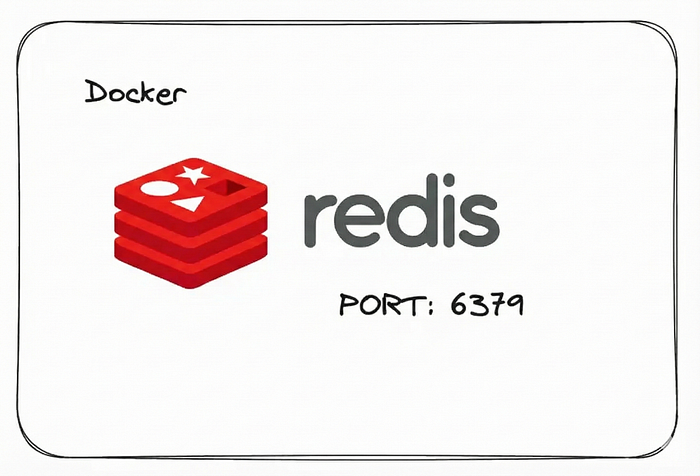
Start with Docker

docker run -d \
--name redis-stack \
-p 6379:6379 \
-p 8001:8001 \
redis/redis-stack:latest
docker exec -it <image_id> bash
redis-cli
Your Redis UI is now live on port 8001, and the Redis CLI is up and responding on port 6379.

What is Redis ?
Redis is a self-described “data structure store” written in C. It’s in-memory and single threaded making it very fast and easy to reason about.

Some of the most fundamental data structures supported by Redis:
- Strings
- Hashes (objects/dictionaries)
- Lists
- Sets
- Sorted Sets (Priority Queues)
- Bloom Filters (probabilistic set membership; allows false positives)
- Geospatial Indexes
- Time Series
In addition to simple data structures, Redis also supports different communication patterns like Pub/Sub and Streams, partially standing in for more complex setups like Apache Kafka or AWS SNS (Simple Notification Service) / SQS (Simple Queue Service).
The core structure underneath Redis is a key-value store. Keys are strings while values which can be any of the data structures supported by Redis: binary data and strings, sets, lists, hashes, sorted sets, etc. All objects in Redis have a key.

Capabilities
- Redis as a Cache
- Redis as a Distributed Lock
- Redis for Leaderboards
- Redis for Rate Limiting
- Redis for Proximity Search
- Redis for Event Sourcing
- Redis for Pub/Sub
Redis using NodeJS

Redis using Python (FastAPI)

Redis for AI agents?
When building effective AI agents, memory is crucial. The most successful implementations use simple, composable patterns that manage memory effectively. Redis is perfect for this role:
- High-performance persistence: Ultra-fast read/write operations (<1ms latency) for storing agent state
- Flexible memory types: Support for both short-term (thread-level) and long-term (cross-thread) memory
- Vector capabilities: Built-in vector search for semantic memory retrieval
- Scalability: Linear scaling for production deployments with increasing memory needs
- Developer-friendly: Simple implementation that complements LangGraph’s focus on composable patterns
How langgraph-checkpoint-redis works
The langgraph-checkpoint-redis package offers two core capabilities that map directly to memory patterns in agentic systems:
1. Redis checkpoint savers: Thread-level “short-term” memory
RedisSaver and AsyncRedisSaver provide thread-level persistence, allowing agents to maintain continuity across multiple interactions within the same conversation thread:

- Preserves conversation state: Perfect for multi-turn interactions where context matters
- Efficient JSON storage: Optimized for fast retrieval of complex state objects
- Synchronous and async APIs: Flexibility for different application architectures
from typing import Literal

from langchain_core.tools import tool
from langchain_openai import ChatOpenAI
from langgraph.prebuilt import create_react_agent
from langgraph.checkpoint.redis import RedisSaver

# Define a simple tool
@tool
def get_weather(city: Literal["nyc", "sf"]):
 """Use this to get weather information."""
 if city == "nyc":
 return "It might be cloudy in nyc"
 elif city == "sf":
 return "It's always sunny in sf"
 else:
 raise AssertionError("Unknown city")

# Set up model and tools
tools = [get_weather]
model = ChatOpenAI(model="gpt-4o-mini", temperature=0)

# Create Redis persistence
REDIS_URI = "redis://localhost:6379"
with RedisSaver.from_conn_string(REDIS_URI) as checkpointer:
 # Initialize Redis indices (only needed once)
 checkpointer.setup()

 # Create agent with memory
 graph = create_react_agent(model, tools=tools, checkpointer=checkpointer)


 # Use the agent with a specific thread ID to maintain conversation state
 config = {"configurable": {"thread_id": "user123"}}
 res = graph.invoke({"messages": [("human", "Which state did I ask?")]}, config)

 # Extract clean response - get the last AI message content
 res = res["messages"][-1].content
This simple setup allows the agent to remember the conversation history for “user123” across multiple interactions. The thread ID acts as a conversation identifier, and all state is stored in Redis for fast retrieval.
2. Redis Store: Cross-thread “long-term” memory
RedisStore and AsyncRedisStore enable cross-thread memory, letting agents access and store information that persists across different conversation threads:
- Vector search capabilities: Retrieve semantically relevant information using embeddings
- Metadata filtering: Find specific memories based on user IDs, categories, or other attributes
- Namespaced organization: Structure memories for different users and use cases
import uuid

from langchain_anthropic import ChatAnthropic
from langchain_core.runnables import RunnableConfig

from langgraph.checkpoint.redis import RedisSaver
from langgraph.graph import START, MessagesState, StateGraph
from langgraph.store.redis import RedisStore
from langgraph.store.base import BaseStore

# Set up model
model = ChatAnthropic(model="claude-3-5-sonnet-20240620")

# Function that uses store to access and save user memories
def call_model(state: MessagesState, config: RunnableConfig, *, store: BaseStore):
 user_id = config["configurable"]["user_id"]
 namespace = ("memories", user_id)

 # Retrieve relevant memories for this user
 memories = store.search(namespace, query=str(state["messages"][-1].content))
 info = "\n".join([d.value["data"] for d in memories])
 system_msg = f"You are a helpful assistant talking to the user. User info: {info}"

 # Store new memories if the user asks to remember something
 last_message = state["messages"][-1]
 if "remember" in last_message.content.lower():
 memory = "User name is Bob"
 store.put(namespace, str(uuid.uuid4()), {"data": memory})

 # Generate response
 response = model.invoke(
 [{"role": "system", "content": system_msg}] + state["messages"]
 )
 return {"messages": response}

# Build the graph
builder = StateGraph(MessagesState)
builder.add_node("call_model", call_model)
builder.add_edge(START, "call_model")

# Initialize Redis persistence and store
REDIS_URI = "redis://localhost:6379"
with RedisSaver.from_conn_string(REDIS_URI) as checkpointer:
 checkpointer.setup()

 with RedisStore.from_conn_string(REDIS_URI) as store:
 store.setup()

 # Compile graph with both checkpointer and store
 graph = builder.compile(checkpointer=checkpointer, store=store)

When using this agent, we can maintain both conversation state (thread-level) and user information (cross-thread) simultaneously:
# First conversation - tell the agent to remember something
config = {"configurable": {"thread_id": "convo1", "user_id": "user123"}}
response = graph.invoke(
 {"messages": [{"role": "user", "content": "Hi! Remember: my name is Bob"}]},
 config
)

# Second conversation - different thread but same user
new_config = {"configurable": {"thread_id": "convo2", "user_id": "user123"}}
response = graph.invoke(
 {"messages": [{"role": "user", "content": "What's my name?"}]},
 new_config
)
# Agent will respond with "Your name is Bob"
Memory types and agentic systems
For memory in agentic workflows, Turing Post categorizes AI memory into long-term and short-term components:
Long-term memory includes:
- Explicit (declarative) memory for facts and structured knowledge
- Implicit memory for learned patterns and procedures
Short-term memory consists of:
- Context window (amount of information available in current interaction)
- Working memory (dynamic information used for current reasoning)
Redis excels at supporting both memory types for agentic workflows:
- Thread-level persistence with RedisSaver handles working memory and context
- Cross-thread storage with RedisStore provides long-term explicit memory
- Vector search through Redis enables efficient retrieval of relevant memories
Building better agents with memory
Successful agentic systems are built with simplicity and clarity, not complexity. The Redis integration for LangGraph adopts this philosophy by providing straightforward, performant memory solutions that can be composed into sophisticated agent architectures.
Whether you’re building a simple chatbot that remembers conversation context or a complex agent that maintains user profiles across multiple interactions, langgraph-checkpoint-redis gives you the building blocks to make it happen efficiently and reliably.
Getting started
To start using Redis with LangGraph today:
pip install langgraph-checkpoint-redis
Check out the GitHub repository at https://github.com/redis-developer/langgraph-redis for comprehensive documentation and examples.
🔗 Resources
💻 GitHub
🌐 Connect
For more insights on AI, data formats, and LLM systems follow me on:
Join thousands of data leaders on the AI newsletter. Join over 80,000 subscribers and keep up to date with the latest developments in AI. From research to projects and ideas. If you are building an AI startup, an AI-related product, or a service, we invite you to consider becoming a sponsor.
Published via Towards AI
Towards AI Academy
We Build Enterprise-Grade AI. We'll Teach You to Master It Too.
15 engineers. 100,000+ students. Towards AI Academy teaches what actually survives production.
Start free — no commitment:
→ 6-Day Agentic AI Engineering Email Guide — one practical lesson per day
→ Agents Architecture Cheatsheet — 3 years of architecture decisions in 6 pages
Our courses:
→ AI Engineering Certification — 90+ lessons from project selection to deployed product. The most comprehensive practical LLM course out there.
→ Agent Engineering Course — Hands on with production agent architectures, memory, routing, and eval frameworks — built from real enterprise engagements.
→ AI for Work — Understand, evaluate, and apply AI for complex work tasks.
Note: Article content contains the views of the contributing authors and not Towards AI.
Related posts
Recent Posts