From Rules to Reasoning: Three LLM Roles That Complete the Enterprise App
Last Updated on September 4, 2025 by Editorial Team
Author(s): Sanjay Krishna Anbalagan
Originally published on Towards AI.
The Question (hook)
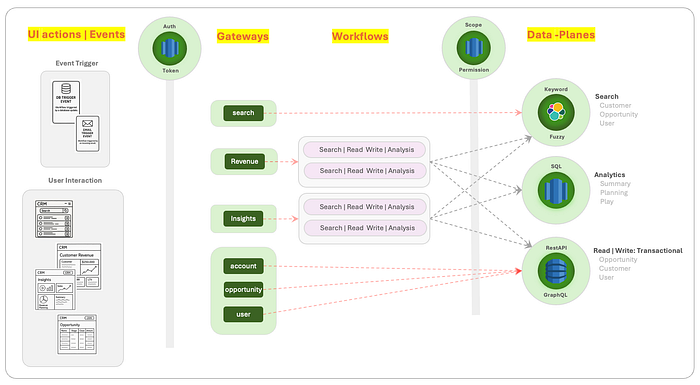
Where should LLMs plug into an enterprise app — without a rewrite — and what exact jobs should they do? The answer isn’t “everywhere.” It’s only where ambiguity sneaks in.
The article discusses how large language models (LLMs) can enhance enterprise applications without necessitating a complete rewrite. It emphasizes identifying specific areas where LLMs can effectively address ambiguity in user input, illustrating a duality between traditional rule-based logic and LLM-assisted interpretations. The piece outlines three critical roles for LLMs within enterprise environments: Action Agents, Domain Agents, and Workflow Routers, each serving to bridge gaps where deterministic rule-based methods fail, ultimately creating a resilient system that leverages both rules and reasoning.
Read the full blog for free on Medium.
Join thousands of data leaders on the AI newsletter. Join over 80,000 subscribers and keep up to date with the latest developments in AI. From research to projects and ideas. If you are building an AI startup, an AI-related product, or a service, we invite you to consider becoming a sponsor.
Published via Towards AI
Towards AI Academy
We Build Enterprise-Grade AI. We'll Teach You to Master It Too.
15 engineers. 100,000+ students. Towards AI Academy teaches what actually survives production.
Start free — no commitment:
→ 6-Day Agentic AI Engineering Email Guide — one practical lesson per day
→ Agents Architecture Cheatsheet — 3 years of architecture decisions in 6 pages
Our courses:
→ AI Engineering Certification — 90+ lessons from project selection to deployed product. The most comprehensive practical LLM course out there.
→ Agent Engineering Course — Hands on with production agent architectures, memory, routing, and eval frameworks — built from real enterprise engagements.
→ AI for Work — Understand, evaluate, and apply AI for complex work tasks.
Note: Article content contains the views of the contributing authors and not Towards AI.
Related posts
Recent Posts