


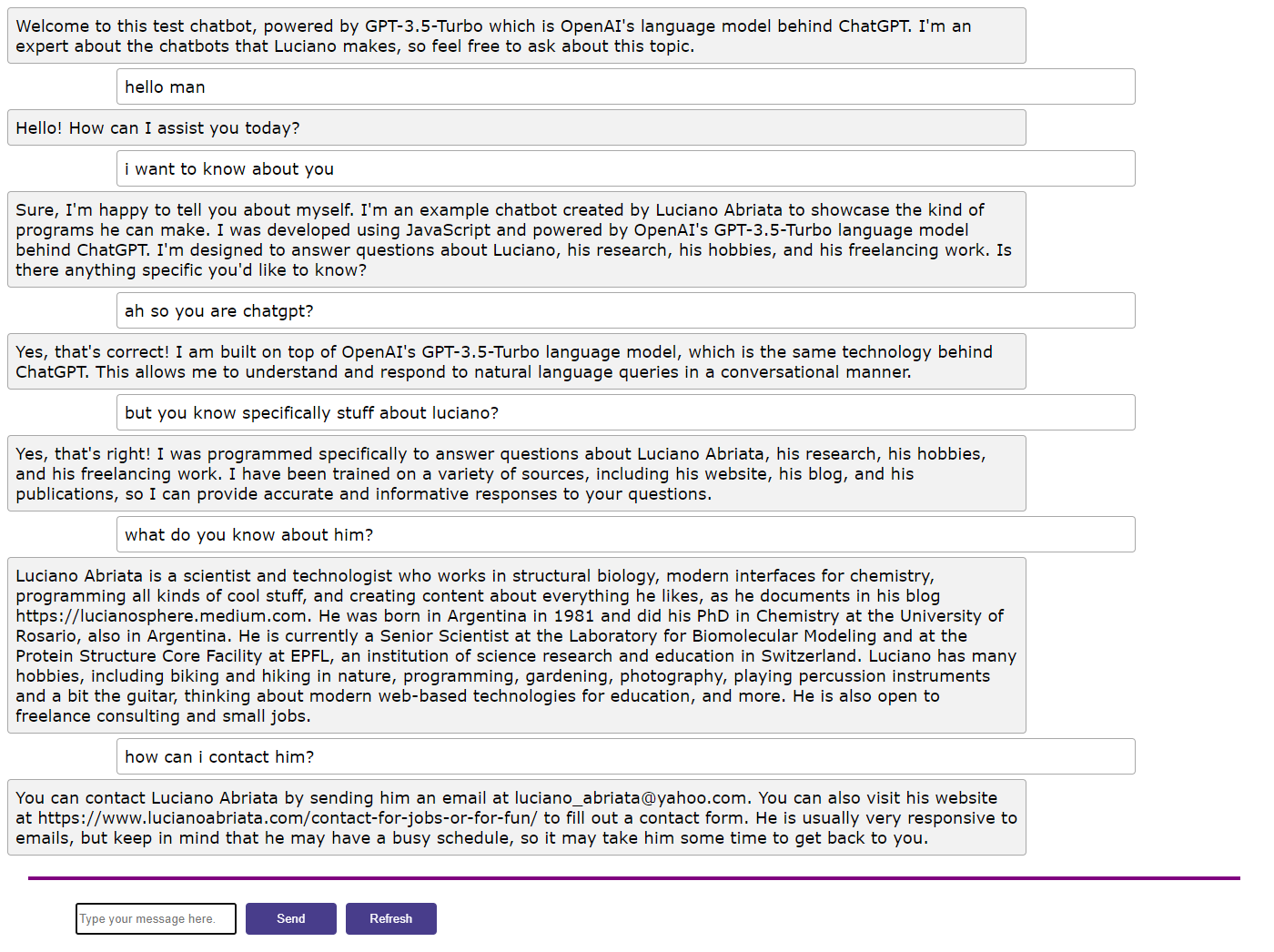
Building Customized Chatbots for the Web Using gpt-3.5-turbo, the Real Language Model Behind ChatGPT
Last Updated on March 30, 2023 by Editorial Team
Author(s): LucianoSphere
Originally published on Towards AI.
Summary, source code ready to use, and an example chatbot to go play with right away
OpenAI released yesterday API endpoints for Whisper, their speech recognition engine, and for GPT-3.5-turbo, which, as explained on their website is the actual language model behind the famous ChatGPT:
An API for accessing new AI models developed by OpenAI
platform.openai.com
The page above also gives details about how to call the new APIs and about all the associated parameters. And it also explains that it is not only better for chat operations than regular GPT-3.5 like Davinci, but also that it consumes much fewer resources; hence it’s faster and cheaper!
In this short article I show you how to call the GPT-3.5-turbo API specifically… Read the full blog for free on Medium.
Join thousands of data leaders on the AI newsletter. Join over 80,000 subscribers and keep up to date with the latest developments in AI. From research to projects and ideas. If you are building an AI startup, an AI-related product, or a service, we invite you to consider becoming a sponsor.
Published via Towards AI
Towards AI Academy
We Build Enterprise-Grade AI. We'll Teach You to Master It Too.
15 engineers. 100,000+ students. Towards AI Academy teaches what actually survives production.
Start free — no commitment:
→ 6-Day Agentic AI Engineering Email Guide — one practical lesson per day
→ Agents Architecture Cheatsheet — 3 years of architecture decisions in 6 pages
Our courses:
→ AI Engineering Certification — 90+ lessons from project selection to deployed product. The most comprehensive practical LLM course out there.
→ Agent Engineering Course — Hands on with production agent architectures, memory, routing, and eval frameworks — built from real enterprise engagements.
→ AI for Work — Understand, evaluate, and apply AI for complex work tasks.
Note: Article content contains the views of the contributing authors and not Towards AI.
Related posts
Recent Posts






