



I Built a Clinical AI Agent — and It Skipped the Tools I Gave It
Author(s): Marie Humbert-Droz, PhD Originally published on Towards AI. An evaluation of tool coverage in local healthcare agents, with a simple fix. I thought my healthcare AI agent would call my lab-checking tool every time it encountered lab values. Instead? Only 1 …
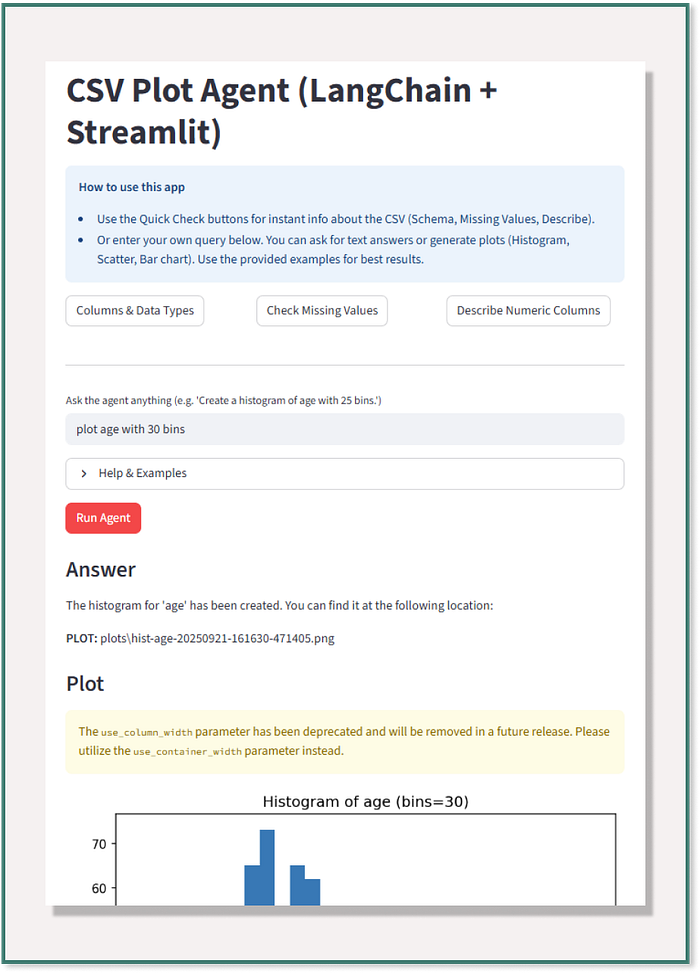
CSV Plot Agent with LangChain & Streamlit: Your Introduction to Data Agents
Author(s): Sarah Lea Originally published on Towards AI. How you can learn the basics of tool-based agents with LangChain, GPT-4o-mini and Streamlit. If you work with data a lot, you’re probably familiar with this. You open a new CSV file and always …

ATOKEN: A Unified Tokenizer for Vision Finally Solves AI’s Biggest Problem
Author(s): MKWriteshere Originally published on Towards AI. How Apple eliminated the need for separate visual AI systems with one tokenizer that handles all content types While competitors grabbed headlines with flashy AI demos, Apple’s researchers were quietly solving visual AI’s most fundamental …

From A/B Testing to DoubleML: A Data Scientist’s Guide to Causal Inference:
Author(s): Rohit Yadav Originally published on Towards AI. Image by Author This article is a comprehensive guide to the most common causal inference techniques, complete with practical examples and code. While the scenarios are inspired by real-world use cases I have worked …

Traditional RAG vs Context Engineering vs Corrective vs Contextual: A Decision Guide
Author(s): Vikram Bhat Originally published on Towards AI. A practical framework for developers to choose the optimal RAG architecture based on accuracy, cost, and complexity requirements In my previous blog, I introduced Context Engineering as a method for optimizing how LLMs consume …

Risk-Adjusted Returns with Python (Part 2): Sharpe Ratio versus Treynor Ratio (Friends or Foes)
Author(s): Siddharth Mahato Originally published on Towards AI. Two legendary metrics for measuring risk-adjusted performance. Which one should you trust for your portfolio? Introduction In Part 1, we analyzed and understood about the Treynor Ratio, a metric to measure investment performance based …
Top 20 LLM Interview Questions
Author(s): Ahmed Boulahia Originally published on Towards AI. Essential questions and clear answers to help you prepare with confidence. So, are you looking for a job as an AI engineer, data scientist, machine learning engineer, or even a data engineer? Or maybe …
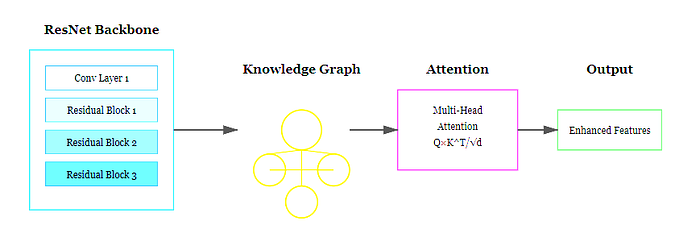
Bridging Symbolic AI and Deep Learning: How Knowledge Graphs are Revolutionizing ResNets
Author(s): Jitesh Prasad Gurav Originally published on Towards AI. When ResNet revolutionized computer vision in 2015, it solved the vanishing gradient problem that plagued deep neural networks. Today, a new revolution is underway: researchers are discovering that by infusing ResNets with structured …

Can AI Learn by Repeating Itself?
Author(s): Arthur Lagacherie Originally published on Towards AI. Recursion could reshape how LLMs scale. A major problem with current LLM architectures is the difficulty of adapting their computational power to match the performance requirements of specific tasks (low performance requirements should use …

Building Multi-Agent Teams with AutoGen: Deep Dive Part 2
Author(s): Aayushi_Sharma Originally published on Towards AI. 🧠 What happens when a single AI agent isn’t enough to solve a problem? In the first part of our AutoGen series, we explored the foundations of this powerful multi-agent framework — its architecture, agent …
A Simple (But Not Too Simple) Intro to Linear Estimators
Author(s): Maxwell’s Demon Originally published on Towards AI. Optimally combining prior knowledge with new data Let’s start with an example. Say a lab technician knows from long-term experience that the lab’s temperature usually hovers around 20 °C. On a particular day, she …
Can Recursion Make LLMs Smarter and More Efficient?
Author(s): Arthur Lagacherie Originally published on Towards AI. Recursion could reshape how LLMs scale. A major problem with current LLM architectures is the difficulty of adapting their computational power to match the performance requirements of specific tasks (low performance requirements should use …

Jet-Nemotron: NVIDIA’s New AI Architecture Achieves 53x Speed Improvement
Author(s): MKWriteshere Originally published on Towards AI. How the PostNAS framework delivers faster language model inference without sacrificing accuracy across benchmarks Large language models consume massive computational resources. Your company’s AI bills keep climbing. Processing times frustrate users waiting for responses. Image …

Beginner’s Visual Guide to Quantisation Methods for LLMs
Author(s): Parth Chokhra Originally published on Towards AI. A Visual Step-by-Step Guide to Popular Quantisation Techniques Quantisation is the process of reducing the precision of numbers used in a model; for example, storing weights in 8-bit integers instead of 16- or 32-bit …
Comparing Four Time Series Forecasting Methods: Prophet, DeepAR, TFP-STS, and Adaptive AR
Author(s): Shenggang Li Originally published on Towards AI. A practical evaluation of models from Meta, Amazon, Google, and a new adaptive AR approach Time series forecasting is everywhere — in business, finance, retail, and even public policy. The challenge is simple to …
Recent Posts


