When Transformers Multiply Their Heads: What Increasing Multi-Head Attention Really Does
Last Updated on October 15, 2025 by Editorial Team
Author(s): Hira Ahmad
Originally published on Towards AI.
When Transformers Multiply Their Heads: What Increasing Multi-Head Attention Really Does
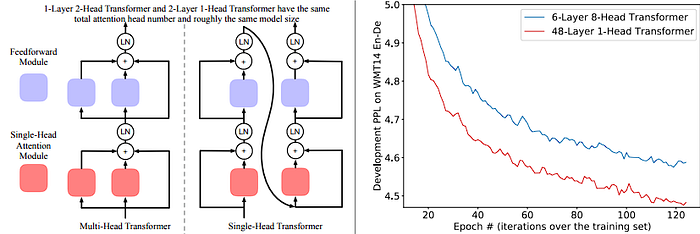
Transformers have become the backbone of many AI breakthroughs, in NLP, vision, speech, etc. A central component is multi-head self-attention: the notion that instead of one attention lens, a model uses several, each looking at different aspects of the input. But more heads isn’t always strictly better. There are gains, limits, costs, and sometimes trade-offs. Let’s walk through all the cases, what’s known, and how things evolve.
The article discusses the concept of multi-head attention in transformers, explaining its benefits, limitations, and the balance required when increasing the number of attention heads. It highlights how varying the number of heads can impact a model’s performance and efficiency, with insights into practical applications and guidelines for managing head counts effectively to avoid redundancy and ensure meaningful representation of data.
Read the full blog for free on Medium.
Join thousands of data leaders on the AI newsletter. Join over 80,000 subscribers and keep up to date with the latest developments in AI. From research to projects and ideas. If you are building an AI startup, an AI-related product, or a service, we invite you to consider becoming a sponsor.
Published via Towards AI
Towards AI Academy
We Build Enterprise-Grade AI. We'll Teach You to Master It Too.
15 engineers. 100,000+ students. Towards AI Academy teaches what actually survives production.
Start free — no commitment:
→ 6-Day Agentic AI Engineering Email Guide — one practical lesson per day
→ Agents Architecture Cheatsheet — 3 years of architecture decisions in 6 pages
Our courses:
→ AI Engineering Certification — 90+ lessons from project selection to deployed product. The most comprehensive practical LLM course out there.
→ Agent Engineering Course — Hands on with production agent architectures, memory, routing, and eval frameworks — built from real enterprise engagements.
→ AI for Work — Understand, evaluate, and apply AI for complex work tasks.
Note: Article content contains the views of the contributing authors and not Towards AI.
Related posts
Recent Posts