IX. FastAPI — Database Patterns: SQLModel & Alembic
Last Updated on January 26, 2026 by Editorial Team
Author(s): Mahimai Raja J
Originally published on Towards AI.
Deep dive into building scalable data layers
Hi! So far we have covered almost every key concept, but without a database nothing can be persisted, right? So, today I will walk you through two important Magic Libraries that make the database operations hustle free.
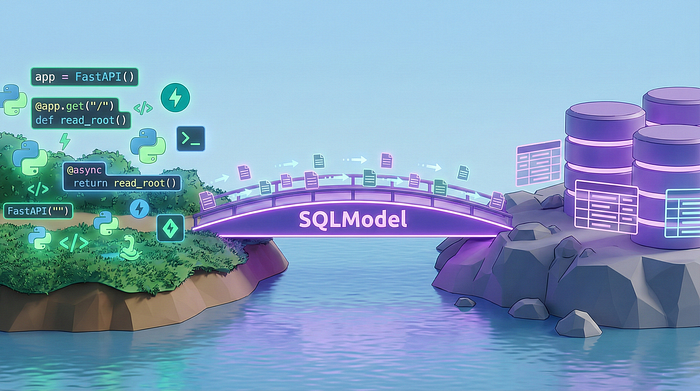
This article discusses the integration of SQLModel and Alembic in FastAPI applications, explaining how SQLModel simplifies database operations by combining features of Pydantic and SQLAlchemy into a single model. It emphasizes the importance of establishing a robust data layer, installing SQLModel, and implementing CRUD operations, while also addressing connection issues, migration strategies, and the benefits of using a repository pattern to maintain separation of concerns between business logic and database interactions. Lastly, it highlights the use of async programming for high-concurrency scenarios and the need for proper database migrations using Alembic.
Read the full blog for free on Medium.
Join thousands of data leaders on the AI newsletter. Join over 80,000 subscribers and keep up to date with the latest developments in AI. From research to projects and ideas. If you are building an AI startup, an AI-related product, or a service, we invite you to consider becoming a sponsor.
Published via Towards AI
Towards AI Academy
We Build Enterprise-Grade AI. We'll Teach You to Master It Too.
15 engineers. 100,000+ students. Towards AI Academy teaches what actually survives production.
Start free — no commitment:
→ 6-Day Agentic AI Engineering Email Guide — one practical lesson per day
→ Agents Architecture Cheatsheet — 3 years of architecture decisions in 6 pages
Our courses:
→ AI Engineering Certification — 90+ lessons from project selection to deployed product. The most comprehensive practical LLM course out there.
→ Agent Engineering Course — Hands on with production agent architectures, memory, routing, and eval frameworks — built from real enterprise engagements.
→ AI for Work — Understand, evaluate, and apply AI for complex work tasks.
Note: Article content contains the views of the contributing authors and not Towards AI.
Related posts
Recent Posts