Google I/O 2025: Mind-Blowing AI Breakthroughs You NEED to Know! 🤯🚀
Last Updated on November 11, 2025 by Editorial Team
Author(s): Yokeswaran
Originally published on Towards AI.
Google I/O 2025: Mind-Blowing AI Breakthroughs You NEED to Know! 🤯🚀

Introduction:
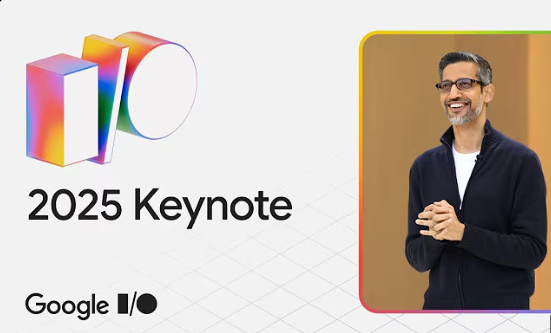
Google I/O 2025, held on May 20–21 at the Shoreline Amphitheatre in Mountain View, California, was a landmark event showcasing Google’s latest advancements in AI, Android, and beyond. This annual developer conference unveiled a wave of innovative features, with a strong focus on enhancing the Gemini AI model, introducing new tools like Google Flow for filmmaking, and expanding Android XR for immersive experiences. From AI-powered search upgrades to groundbreaking 3D video communication with Google Beam, I/O 2025 highlighted Google’s commitment to pushing technology forward. Here’s a closer look at the key announcements that are set to shape the future of how we work, create, and connect.
1. Gemini 2.5 Pro Takes Center Stage:
One of the biggest announcements was Gemini 2.5 Pro, Google’s newest large language model (LLM). According to Google, Gemini 2.5 Pro reached the top spot on the LMArena benchmark, which measures how well different AI models perform on tasks like reasoning, coding, and long-context comprehension. In simple terms, it means Gemini 2.5 Pro can answer complex questions and write code more accurately than nearly any other publicly known AI model.
2. Token Growth Highlights AI Adoption:
At last year’s I/O, Google was handling 9.7 trillion tokens (basic pieces of text) per month across products and APIs. In 2025, that figure jumped to over 480 trillion tokens — a roughly fifty-fold increase in just one year.
- Developer Adoption: Over 7 million developers now build with Gemini — five times more than last year.
- Platform Usage: Gemini usage on Vertex AI is up fortyfold, showing that businesses are embedding AI into production systems at a rapid pace.
3. Ironwood TPU: Powering Next-Gen AI
To support these massive AI workloads, Google introduced its 7th-Generation TPU, codenamed Ironwood. Key points:
- 10× Performance over the previous TPU generation, allowing models like Gemini 2.5 to run faster and handle more data.
- Each TPU pod now delivers 42.5 exaflops of compute — an “exaflop” is one quintillion (10¹⁸) operations per second .
- Availability: Ironwood TPU pods will become available to Google Cloud customers later in 2025, so companies can rent this raw power for their own AI training and inference.
4. Project Astra and Google Beam: Bridging Real & Virtual Worlds:
Google Beam (formerly Project Starline)
- What It Is: An “AI-first” video communications platform that transforms 2D camera streams into a realistic 3D view. Using six input cameras and an AI model, Beam reconstructs depth information to make it feel like you’re in the same room as the other person, even if you’re miles apart .
- HP Partnership: HP will build specialized hardware to deploy Beam in enterprise settings. Picture a meeting room where participants appear as 3D “light fields,” enabling better eye contact and natural interaction.
Project Astra: AI “World Model”
- “Interacting Live Environments”: Astra is described as a universal AI assistant that perceives and reasons about the real world. By combining live camera input, voice commands, and Gemini’s reasoning, Astra can help with tasks like real-time navigation, identifying objects around you, or providing step-by-step guidance .
- Accessibility for the Blind: In a dedicated demo, Astra used audio cues and depth sensing to help blind users “see” their environment — announcing obstacles, reading signs, or describing nearby objects.
Real-World Scenarios:
- Navigation: Point your phone’s camera, and Astra says “Stairs ahead” or “Door to your left.”
- Home Assistance: Show Astra a broken appliance, and it can suggest repair steps or order spare parts automatically.
- Mixed Reality Glasses: With Android XR (see “Project Moohan” below), Astra can overlay contextual information onto your field of view.
5. AI Features in Chrome :
- What It Does: When browsing, you can switch to “AI Mode” in Chrome. Instead of just showing a list of web links, AI Mode provides conversational answers, summaries, or auto-generated content based on the page. For example, while reading a long article, you can ask, “Summarize the key points” and get a concise overview shown in a sidebar .
- Who Can Access It: Initially, AI Mode in Chrome will roll out to Google AI Pro and AI Ultra subscribers in the U.S. later in 2025, with plans to expand globally in the following months
6. Personal and Proactive AI Models
At I/O 2025, Google emphasized that AI models are becoming more personal and proactive:
- Personalized Gemini Models: Rather than one size fits all, Gemini can learn your writing style, preferences, or frequently used vocabulary. Over time, it suggests replies that “sound like you” in Gmail, Google Docs, and chat apps.
- Proactive Assistance: Instead of waiting for you to ask, Gemini will predict what you need next.
For example:
- If you’re planning a weekend trip in Gmail, Gemini might suggest a packing list and even recommend nearby attractions.
- While coding, Gemini could recognize you’re debugging a function and offer to generate unit tests automatically.
7. Generative Media: Veo 3, Flow, Imagen 4:
Veo 3
- What It Is: A video model that generates short clips with native audio — music, sound effects, and dialogue — based on text prompts. For instance, you could type “A summer garden scene with birds chirping and soft piano music” and get a 10-second video clip that matches.
- Availability: Veo 3 is live in the Gemini app for AI Ultra subscribers and coming to Vertex AI for enterprises soon.
Flow
- What It Does: Flow is a video creation tool that stitches together multiple AI models — like Veo for visuals and Imagen 4 for still images — into a seamless editing environment. It can:
Draft a Script: Based on text input, Flow generates a storyboard.
Produce Video: Using Veo 3, it creates animated scenes with appropriate background music and sound effects.
Allow Manual Tweaks: You can adjust timing, swap in new audio tracks, or insert AI-generated images from Imagen 4 before final export.
Imagen 4
- What It Is: Google’s latest image generation model, designed to create highly detailed and realistic pictures from text prompts. It integrates with Flow to produce seamless transitions between still images and short video clips.
8. AI in Google Meet & Live Translation
Google Meet also saw AI improvements:
- Live Translation: English ↔ Spanish translation will begin testing for Workspace users, with more languages to follow. During a video call, participants can speak in their native language, and Meet shows real-time captions in the target language.
- Automated Meeting Summaries: After a call, Gemini can generate bullet-point notes highlighting key decisions and action items, saving time on manual note-taking.
9. Productivity Boosters: Jules, Sketch 2D→3D
Jules (AI Coding Agent)
- How It Works: Jules reads your code repository, runs tests, and makes changes — all within a secured, temporary Google Cloud virtual machine. Once done, it surfaces edits as pull requests for your review. For example, if you ask Jules to “fix the login API bug,” it:
- Clones the repository
- Runs the failing test
- Applies a suggested patch
- Runs tests again to confirm the fix.
- Current Status: Public beta offers five free tasks per day. An enterprise tier with higher quotas and additional features will arrive later in 2025.
Sketch 2D→3D
- What It Does: Google showed a prototype where you draw a simple 2D sketch — say, a chair — and the AI model turns it into a photorealistic 3D object. Designers and architects can quickly visualize concepts without manually building models in software like Blender
10. Project Moohan (Samsung + Google):
- What It Is: The first Android XR headset, co-developed with Samsung. It resembles a lighter, more comfortable version of other VR headsets and integrates Gemini for real-time information overlay. During demos:
- Spatialized Video: Standard video footage becomes a 3D environment you can look around in.
- Live Translation: Gemini translates spoken language and displays subtitles in your field of view.
- Environmental Understanding: Point the headset at a tree, and Gemini says, “This is an oak tree. It’s common in your region,” using its object recognition and cloud knowledge.
- Ergonomics & Design: Comfort was a priority — interchangeable prescription lens inserts, a balanced strap, and tethered battery pack for portability without a PC.
Conclusion
Google I/O 2025 was a showcase of how quickly AI is evolving. From Gemini 2.5 Pro topping benchmarks to Ironwood TPUs powering real-time experiences, the event highlighted that AI is no longer the future — it’s the present. With tools like Jules, Veo 3, and Project Moohan, Google aims to make AI more personal, proactive, and accessible.
After reading this recap, you should have a clear view of:
- Why AI token processing has exploded (9.7 trillion → 480 trillion monthly tokens).
- How Deep Think and Jules can improve tasks like coding and math.
- What Beam and Astra mean for 3D video calls and environmental assistance.
- How AI Mode in Chrome, virtual try-on, and smart glasses will change shopping, browsing, and everyday interactions.
As these features roll out over the rest of 2025, you can expect more intuitive search, better automation in your workflows, and new hardware (like Moohan headsets and XR glasses) that blur the line between digital and physical. In short, Google I/O 2025 painted a picture of an AI-first world, where assistants aren’t just reactive — they’re proactive partners in our daily lives.
Join thousands of data leaders on the AI newsletter. Join over 80,000 subscribers and keep up to date with the latest developments in AI. From research to projects and ideas. If you are building an AI startup, an AI-related product, or a service, we invite you to consider becoming a sponsor.
Published via Towards AI
Towards AI Academy
We Build Enterprise-Grade AI. We'll Teach You to Master It Too.
15 engineers. 100,000+ students. Towards AI Academy teaches what actually survives production.
Start free — no commitment:
→ 6-Day Agentic AI Engineering Email Guide — one practical lesson per day
→ Agents Architecture Cheatsheet — 3 years of architecture decisions in 6 pages
Our courses:
→ AI Engineering Certification — 90+ lessons from project selection to deployed product. The most comprehensive practical LLM course out there.
→ Agent Engineering Course — Hands on with production agent architectures, memory, routing, and eval frameworks — built from real enterprise engagements.
→ AI for Work — Understand, evaluate, and apply AI for complex work tasks.
Note: Article content contains the views of the contributing authors and not Towards AI.
Related posts
Recent Posts