Amazon S3 Vectors: What It Means for Enterprise AI Architecture
Last Updated on October 18, 2025 by Editorial Team
Author(s): Janahan Sivananthamoorthy
Originally published on Towards AI.
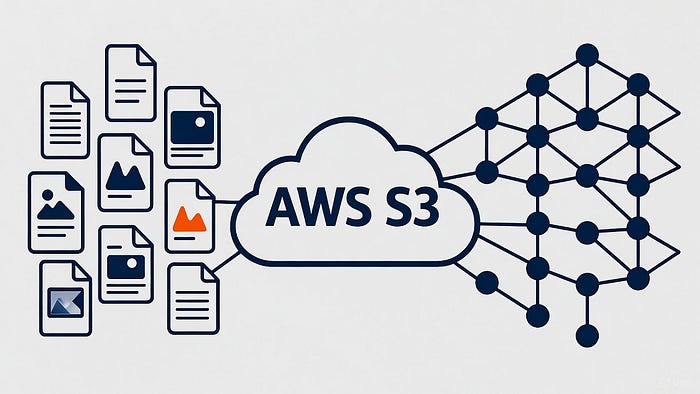
Amazon S3 Vectors: What It Means for Enterprise AI Architecture
Hi there!
If you are a member, just scroll and enjoy the post!
Not a member? click the link here to enjoy the full article.
S3 Vectors revolutionizes how enterprises handle data by decoupling storage from compute, making it easier and more cost-effective to manage vast amounts of data stored in S3. By allowing compute resources to activate only when needed, it eliminates the unnecessary costs of running clusters continuously. Through features like vector buckets and straightforward APIs, S3 Vectors enhances the efficiency of querying and managing data, facilitating applications such as semantic search and similarity detection across large datasets, while positioning itself as an integral component of cloud architecture rather than merely a specialized service.
Read the full blog for free on Medium.
Join thousands of data leaders on the AI newsletter. Join over 80,000 subscribers and keep up to date with the latest developments in AI. From research to projects and ideas. If you are building an AI startup, an AI-related product, or a service, we invite you to consider becoming a sponsor.
Published via Towards AI
Towards AI Academy
We Build Enterprise-Grade AI. We'll Teach You to Master It Too.
15 engineers. 100,000+ students. Towards AI Academy teaches what actually survives production.
Start free — no commitment:
→ 6-Day Agentic AI Engineering Email Guide — one practical lesson per day
→ Agents Architecture Cheatsheet — 3 years of architecture decisions in 6 pages
Our courses:
→ AI Engineering Certification — 90+ lessons from project selection to deployed product. The most comprehensive practical LLM course out there.
→ Agent Engineering Course — Hands on with production agent architectures, memory, routing, and eval frameworks — built from real enterprise engagements.
→ AI for Work — Understand, evaluate, and apply AI for complex work tasks.
Note: Article content contains the views of the contributing authors and not Towards AI.
Related posts
Recent Posts