Agentic AI Project: Build a Multi-Agent System With LangGraph
Author(s): Alpha Iterations
Originally published on Towards AI.
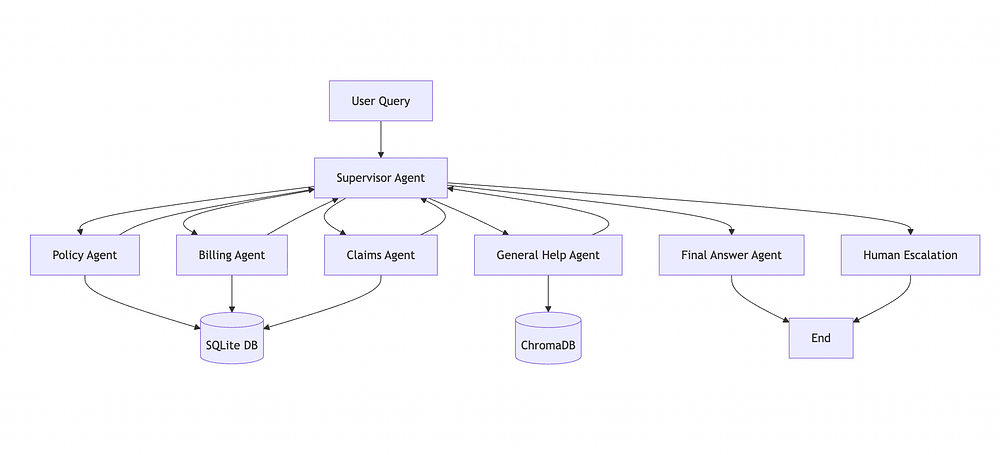
This is an end-to-end project on building a multi-agent insurance support system using Agentic AI [LangGraph and OpenAI API]. [Code Included].
Non members read here for free.
The article discusses the creation of a multi-agent system for insurance customer support, highlighting how different specialized agents — like billing, claims, and policy experts — work together. It explains the current challenges in traditional insurance support, such as inefficiency and long wait times, and presents a solution using an AI-powered multi-agent system that intelligently routes inquiries and offers personalized responses. The final part elaborates on the project setup, technologies used, and the overall framework designed to improve user interaction and service delivery in the insurance sector.
Read the full blog for free on Medium.
Join thousands of data leaders on the AI newsletter. Join over 80,000 subscribers and keep up to date with the latest developments in AI. From research to projects and ideas. If you are building an AI startup, an AI-related product, or a service, we invite you to consider becoming a sponsor.
Published via Towards AI
Towards AI Academy
We Build Enterprise-Grade AI. We'll Teach You to Master It Too.
15 engineers. 100,000+ students. Towards AI Academy teaches what actually survives production.
Start free — no commitment:
→ 6-Day Agentic AI Engineering Email Guide — one practical lesson per day
→ Agents Architecture Cheatsheet — 3 years of architecture decisions in 6 pages
Our courses:
→ AI Engineering Certification — 90+ lessons from project selection to deployed product. The most comprehensive practical LLM course out there.
→ Agent Engineering Course — Hands on with production agent architectures, memory, routing, and eval frameworks — built from real enterprise engagements.
→ AI for Work — Understand, evaluate, and apply AI for complex work tasks.
Note: Article content contains the views of the contributing authors and not Towards AI.
Related posts
Recent Posts