


H2Oai releases Fully OpenSourced GPT
Last Updated on July 17, 2023 by Editorial Team
Author(s): Dr. Mandar Karhade, MD. PhD.
Originally published on Towards AI.
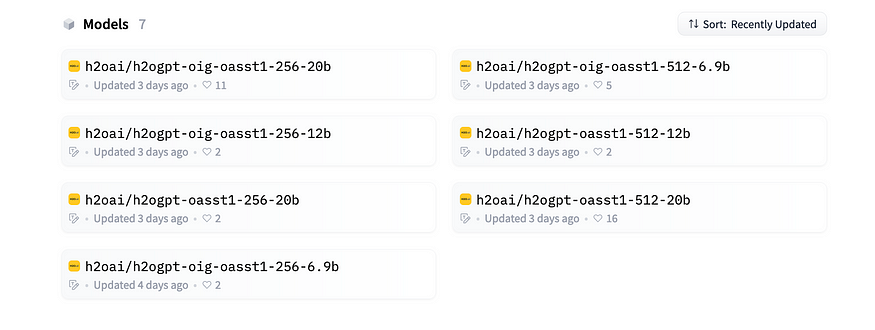
h2oGPT-20B, h2oGPT-12B v1, and h2oGPT-12B v2 models have been released with Apache 2.0 license (Completely free for even commercial use case)
On April 21st, H2O.ai decided to make a splash in the Large Language Model space dominated by ChatGPT. They have released their own GPT called H2Ogpt. The differentiating factor is that this release is completely open-source under the old Apache 2.0 license, including the commercial use cases. There are three versions of the model available.
The first model is their flagship model h20GPT-20B is large enough not to fit on a GPU with 24GB VRAM. The recommended size of the VRAM for this model will be 48GB. So hard luck for all expensive cards like NVIDIA RTX 3090 and 4090 or… Read the full blog for free on Medium.
Join thousands of data leaders on the AI newsletter. Join over 80,000 subscribers and keep up to date with the latest developments in AI. From research to projects and ideas. If you are building an AI startup, an AI-related product, or a service, we invite you to consider becoming a sponsor.
Published via Towards AI
Towards AI Academy
We Build Enterprise-Grade AI. We'll Teach You to Master It Too.
15 engineers. 100,000+ students. Towards AI Academy teaches what actually survives production.
Start free — no commitment:
→ 6-Day Agentic AI Engineering Email Guide — one practical lesson per day
→ Agents Architecture Cheatsheet — 3 years of architecture decisions in 6 pages
Our courses:
→ AI Engineering Certification — 90+ lessons from project selection to deployed product. The most comprehensive practical LLM course out there.
→ Agent Engineering Course — Hands on with production agent architectures, memory, routing, and eval frameworks — built from real enterprise engagements.
→ AI for Work — Understand, evaluate, and apply AI for complex work tasks.
Note: Article content contains the views of the contributing authors and not Towards AI.
Related posts
Recent Posts






