Inside Claude Code’s Agent Teams and Kimi K2.5’s Agent Swarm
Last Updated on February 9, 2026 by Editorial Team
Author(s): JP Caparas
Originally published on Towards AI.
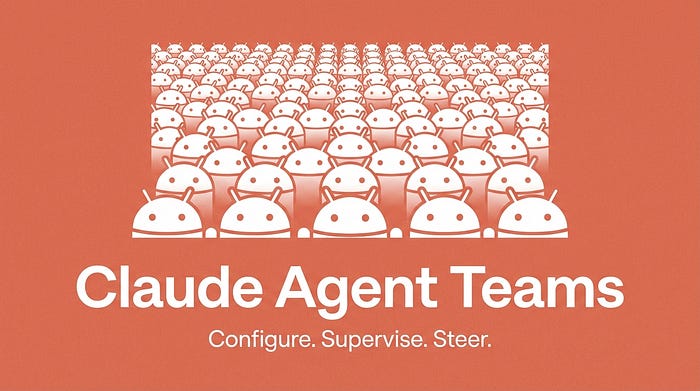
Anthropic and Moonshot shipped competing multi-agent systems within 10 days. One trusts developers. The other trusts reinforcement learning. Pick your side.
On January 27, 2026, Moonshot AI quietly released Kimi K2.5 with a feature called Agent Swarm. A trainable orchestrator that could spin up 100 sub-agents and coordinate ~1,500 tool calls without a human touching anything.
The article compares two innovative multi-agent systems: Anthropic’s Agent Teams, which integrates developer supervision into multi-agent coordination, and Moonshot’s Kimi K2.5’s Agent Swarm, which uses reinforcement learning for autonomous coordination. It discusses the rapid evolution of these technologies within a few days in early 2026, emphasizing both systems’ unique philosophical approaches, architectural differences, and the implications of their deployment in real-world applications, including a case study where a clean-room C compiler was developed using these frameworks.
Read the full blog for free on Medium.
Join thousands of data leaders on the AI newsletter. Join over 80,000 subscribers and keep up to date with the latest developments in AI. From research to projects and ideas. If you are building an AI startup, an AI-related product, or a service, we invite you to consider becoming a sponsor.
Published via Towards AI
Towards AI Academy
We Build Enterprise-Grade AI. We'll Teach You to Master It Too.
15 engineers. 100,000+ students. Towards AI Academy teaches what actually survives production.
Start free — no commitment:
→ 6-Day Agentic AI Engineering Email Guide — one practical lesson per day
→ Agents Architecture Cheatsheet — 3 years of architecture decisions in 6 pages
Our courses:
→ AI Engineering Certification — 90+ lessons from project selection to deployed product. The most comprehensive practical LLM course out there.
→ Agent Engineering Course — Hands on with production agent architectures, memory, routing, and eval frameworks — built from real enterprise engagements.
→ AI for Work — Understand, evaluate, and apply AI for complex work tasks.
Note: Article content contains the views of the contributing authors and not Towards AI.
Related posts
Recent Posts